Friday, November 28, 2008

Happy Black Friday y’all!

Today on The Current

Ah, the sounds of the holidays ... a cacophony of cascading voices, all urging you to spend. And that's just the beginning of the commercial onslaught. Which leaves me with just one question. Aren't we supposed to be in the middle of some kind of ever-expanding, global economic meltdown?

Now a financial apocalypse is as good a reason as any for a little retail therapy. But still, it all seems a little odd to be asking people to spend their way through austerity. And yet, it seems to be working because retail sales in Canada are holding strong, even as consumer confidence plummets.

Benjamin Barber has a few thoughts about why that might be and why the perils of shopping and consumption are so difficult to avoid. He's a political theorist who's best known for his book, Jihad vs. McWorld. His latest book is Consumed: How Markets Corrupt Children, Infantilize Adults and Swallow Citizens Whole and he was in New York City.

Here are a few quotes from the interview…

"…if socialist politics dominates every sector of society we call that totalitarianism. Nothing wrong with religion. Religion is part of our life. But when religion dominates every sector of society – the cultural sector, the leisure sector, the economic sector, we call it theocracy. But when commerce dominates every part of society we call that liberty."

"I have news for all those folks who are buying environmentally good products. If you really care about the environment just buy less."

It is surprising to me that the man still claims to endorse capitalism. Even so it sounds like a he might just make a good Mennonite…

listen to the whole thing here

Tuesday, November 25, 2008

Joseph Dwyer

The Current presented one of the most exceptional pieces of documentary I have read, watched or listened to in a while. The piece tracks the demise of a soldier who became an icon of the all the hope that the war in Iraq had promised to deliver through this picture taken by an embedded journalist.

The piece is titled Out of Frame and is available as here

Wednesday, November 19, 2008

Tuesday, November 18, 2008

The Theory of the Leisure Class

A dude named Thorstein Veblen wrote a book called The Theory of the Leisure Class. Veblen has intrigued me ever since I was introduced to his theories last spring in the Anthropology of Popular Culture class in which I was a student. Veblen contends that the markers between classes are actually their engagement with leisure. Here is what he has to say:

"The…gentleman of leisure, then, not only consumes of the staff of life beyond the minimum required for subsistence and physical efficiency, but his consumption also undergoes a specialization as regards the quality of the goods consumed."

"Since the consumption of these more excellent goods is an evidence of wealth, it becomes honorific; and conversely, the failure to consume in due quantity and quality becomes a mark of inferiority and demerit."

And…

"Closely related to the requirement that the gentleman must consume freely and of the right kind of goods, there is the requirement that he must know how to consume them in a seemly manner."

"Conspicuous consumption of the valuable goods is a means of reputability to the gentleman of leisure. As wealth accumulates on his hands, his own unaided effort will not avail to sufficiently put his opulence in evidence by this method. The aid of friends and competitors is there fore brought in by resorting to the giving of valuable presents and expensive feasts and entertainments."

Veblen's ideas make even more sense today than they did back in 1899. He certainly had heard of RVs, Hybrid cross-overs, time shares and 52 TV's but he seems to have captured an aspect of how society works that is hauntingly evident today. To boil it down Veblen basically says that the marks of social difference in class (rich and poor) is their ability to consume stuff conspicuously. The more and better quality goods that a person or group consumes reveals their status in comparison to others in society. But it is not just the ability to consume these goods that makes him/her distinct. Veblen suggests that it is how that consumption is made public or apparent that achieves the goal of setting apart an individual as a higher class person. This public or conspicuous consumption has interesting effects. It forces the consumer to change the way in which he/she consumes these better quality goods (i.e. there is a certain way that fine wine is to be tasted and ultimately drunk). This distinctive behaviour further empowers the higher class person to be honoured even more as other people try to emulate the way they consume certain goods. Here Veblen's theory really makes an interesting comment on our consumeristic society:

Have you ever gone on a vacation or trip and not bothered to tell anyone about it? Have you ever stopped to evaluate why you purchased a newer vehicle when the old one was still functioning to transport you from one place to the other? Is it because of appearance? Or what about renovations to your house? Or that new big screen TV? Our ability to engage with excess is a huge factor in determining our social status but it is not just what we can all afford that make the difference. It is out ability to use that consumption to negotiate a higher status in the social context within which we operate. If we can't talk about it – why bother.

A Trip to Cuba is a higher rank than holidays in the Rockies which is higher than 3 nights at a hotel with a waterslide. Why? Because when we talk about our holiday the exotic nature of Cuba garners higher currency than the hotel in terms of how it is evaluated in comparison to how other people spend their holidays. Our ability to engage in leisure is the currency. Money itself is devalued as a social indicator and leisure becomes the social capital. Spend some time listening to teenagers and you will see that they talk like this already. Money is devalued as the focus of work or career. The ability to engage leisure is the real deal.

Thursday, November 6, 2008

Has anyone heard of this new chic-Fiest?

I love my Itunes (notice how possessive I am)! It's the only way I purchase music. The interface has some pretty good features. It allows me to play my library of song in "Party Shuffle" mode which randomizes the songs in my library and plays them back with typical overlap that radio stations usually do in their back to back style. I like other features and am frustrated with others.

One frustration is how my choice of songs is limited to those which have been given permission to be sold by the artist/record company. I have, as those who know me well, an eclectic taste in music. This diversity in taste often leaves me frustrated when I am not able to pay for the music that I really want to listen to. And claiming that my tastes are eclectic is not intended to be an arrogant position in anyway. There are many who could claim a far more eclectic musical palate than mine. I do not aspire to be more eclectic – or less for that matter. However, there are many who would readily agree that for as much as my taste might be eclectic in some way, it is just plain poor taste. To those of you who feel that way, let me remind you that I have rarely if ever criticized your narrower scope in musical selection as a negative quality. And I can hear the voices lining up who would seek to tether me to a fondness of 80's music, for instance. This is nothing more than a thinly disguised attempt to justify their own narrow musical selections with the suggestion that I have in essence narrowed my own and falsely labelled myself as open. This is petty and frankly unsettling since it reflects the prevailing cultural tendency toward musical homogeneity – a puzzling site of power indeed. But this one portal or access point (Itunes) that I use to engage with recorded music serves me well most of the time but rather poorly when the borderlands of my musical palate find penchant to be explored. So it is that I have been limited-controlled if you will. But clearly it is my choice to use this interface. So some would say I am limited by limiting myself. Is this really the case?

In order to understand this better we are drawn inevitably to my selection of Itunes as the vehicle to access the music I want to listen to and find important. There are indeed a plethora of other options that could allow me access to music – some could conceivably allow me more access to those pieces of music that Itunes does not allow. I could purchase CD's, attend concerts, listen to certain radio stations (on Satellite radio let's say). Each of these options, as I hope is obvious; themselves exercise a limiting or controlling effect on my access to music. I could also choose to download my music through 'free' file sharing sites which arguably might not be restricted to the limitations of the corporate agenda imposed by Apple. Not only is this option a contravention of the social and legal parameters that exist in our society but this option clearly makes my musical choice limited to the condition that someone else out there must have been willing to share the very same piece of music I want to listen to. Again this reinforces that problematic notion of homogeneity in music selection. In essence then the choice of Itunes must be seen as presenting a complexity of problematic aspects that, while not being similar, can be just as problematic.

Now we return to investigate the premise presented above: some would say I am limited by limiting myself. We can observe then that when it comes to accessing music in general and specifically the music I want to listen to and especially not just the music they want me to listen to, there is no other choice than to be limited and limiting. In other words, anyway you look at it I am controlled into controlling myself with the controlling apparatus with which I access music. I can to a measure control which control I will allow to control me but in the end I am still controlled. But this is not nearly as neat and tidy as it seems when I write it as it is above. There are many forces which confound this apparatus, none of which I suspect most of you are interested in wading through if in fact you have made it this far. Save to say that this apparatus (Itunes) is itself under some sort of control under which I would also then inevitably fall.

A few interesting questions can then arise out of these proposals. Am I listening to the music I really want to hear? Can I really know if music exists that I want to hear but cannot listen to? Can artists actually exist that are not somehow tainted by the homogenizing reality of our present (musical) culture? What kind of music is being overlooked, forgotten, or suppressed? And the most important one of all: With the drop in oil commodities will the per song cost of $0.99 be reduced?

Play along?

Saturday, October 25, 2008

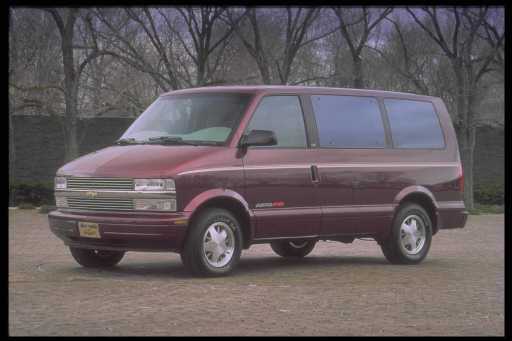
My Astro

It's been running rough! To be honest I can't tell you what is wrong with it. It shakes and shivers when I brake. I can smell gasoline every time I step out of the vehicle. There are small but growing spots appearing on the concrete under where my van rests over night. It's time to take it in. Not too long from now I will need to jam my family into it and head up north to Red Deer to visit my in-laws. Now I'm not clueless about vehicles but you could hardly translate my knowledge into any sort of real advantage when it comes to repair. There's too much that can go wrong and I certainly do not want to make my situation worse.

So I gotta take my beater into the garage – it has to be done. Now I have worked really hard to develop a relationship with a garage that I feel that I can trust. But I can't help thinking that I am sorta getting screwed – every time I leave. And the bills are never small. I should say that I know enough that if my mechanic were to suggest that my bumper needed replacing I could tell he was shafting me. But even if it is not something as obvious as that I have to admit that I am pretty suspicious every time I get the bill. That's partially due to my ignorance – but it's mostly due to my position – especially that of a customer. By bringing my vehicle in I am already giving over authority to my mechanic to tell me what is wrong. Sure I can tell him what the symptoms are but the basic reason I am bringing my van in is because I am unable (whether due to time or expertise or ability) to fix the vehicle myself. So he holds the conch. "You need a new gympson saddle on your left value deliberator!" he says. "Alright," I say, caring less at this point about whether I can figure out what his terms mean than what it is going to cost me. You know what is weird – the more the bill is the more I wonder about my mechanic integrity. And he's the good mechanic – don't even get me started on Canadian Tire! One time I even had a tow truck drag my van in - really reaching for the pity response. Stupid thing was that was the highest bill I ever paid on the van and you know what it never has run the same since. I'm the customer.

Then something totally weird happened to me. This guy flagged me down on the highway between Lethbridge and Coaldale. He came up to me – total stranger – and said he had been following me since the lights. He said he had noticed my van shaking as I pulled up to the light and said he could tell the engine was running rough. He asked me if I was looking for some help. I jumped out of the van not sure what to make of this guy but his diagnosis seemed trustworthy (not because it was any different than that of my mechanic but precisely because it came unsolicited). After some conversation and some rooting around under the hood he asked me if he could adjust the carburetor on the van. Then he said, "Listen here's my number – call me and let me know if that gas smell is still showing. And if you want we can talk about some time when I could come over and we could look at the vehicle in depth." While I was trying to wipe off the grease stain on his business card so I could put it in my wallet, he disappeared back into his truck. When I got home – the smell was still there but the van was running more smoothly – it did not want to stall mid-idle. I think I might give this guy a call…

Wouldn't it be nice if this is how the story goes? See what I mean.

Monday, October 20, 2008

The self defeating nature…

Of right-wing politics' espousal of capitalism.

I think that John D'Emilio draws some fascinating conclusions about the way that the project of Capitalism is one that contradicts the strength of the classically defined family. Read his article here. Essentially he points out that with the advent of Capitalisms 'free labour' market, the family needed to shift its identity. Formerly when the family was the locus of production and was essentially self sustaining sexual identity (as a way to define yourself) did not exist. Sex was essential to procreation to produce labourers that sustained the family fortune. When individuals sought employment outside the home and no longer required the home to be the main source of production (since they could essentially purchase the products they needed). Sex, then, gradually came to be experienced as more dominantly an emotional expression and experience. As such D'Emilio contends that people were now free to form a sexual identity which was not available to them previously. His contention is that homosexuality became an identity at that point – not just an act. He points to several crucial historical events that he feels have shaped the growth of homosexuality in the last hundred years. I'm not nearly as interested in D'Emilio's claims to the establishment of the homosexual identity – even though I would find them mostly amenable. What I am really interested with is how he frames the oppositional nature that the essence of the family is to capitalist ideology.

"Finally, I have suggested that the relationship between capitalism and the family is fundamentally contradictory. On the one hand, capitalism weakens the material foundation of family life, making it possible for individuals to live outside the family, and for a lesbian and gay male identity to develop. On the other hand, it needs to push men and women into families, at least long enough to reproduce the next generation of workers. The elevation of the family to ideological pre-eminence guarantees that capitalist society will reproduce not just children but also heterosexism and homophobia. In the most profound sense, capitalism is the problem."

Bigotry of any form is certainly not foundational to the values of western society (let alone Christian values). And it is not that D'Emilio blames the family for the problem of bigotry rather the contradictory nature of capitalism to nature of the family. I think he coyly hints that the rise in divorce rate could be attributable to this contradiction as well. What is interesting is that right wing politics which has advocated more strict adherence to capitalistic principles in regards to economy is also the 'side' that claims to most ardently defend the nature – essence of the family. It also occurs to me that the rhetoric around the moral defence of the family serves only to heighten the tension that produces hatred toward people who choose alternate lifestyles. These idea could apply far more broadly to include racial and economic prejudice.

Again, I am not sure that D'Emilio's solutions in the last few paragraphs of this text are ones I agree with but I think there could be some value, for those of us who defend the family (of which I am one) as the essential component to a healthy society, in talking about how our ideological frameworks inform our political positions.

Saturday, October 18, 2008

If Dolly Parton...

read this blog she might be encouraged to drink more coffee. check this out!
People this just goes to show that coffee is not only a fabulous tasting beverage but it also has body modification properties - SWEET!

Friday, October 17, 2008

An Interesting Dichotomy

John Stewart (The Daily Show) pointed out and interesting dichotomy at work in this video. Apparently Arab and 'decent family man' are at least vauguely dichotomous positions if not directly oppositional ones. why don't we all do our best to nurture fear?!?