
Is it just a coincidence that some of the nations with the highest consumption of coffee are also some of the highest achievers on the PISA academic results in MATH, SCIENCE, and LITERACY!
HMMMMM!
Drink Up Folks!!!!!
Is it just a coincidence that some of the nations with the highest consumption of coffee are also some of the highest achievers on the PISA academic results in MATH, SCIENCE, and LITERACY!
HMMMMM!
Drink Up Folks!!!!!

"If the mythology of revolution indicates a pure state of popular will, the mysticism of the state—its modern political theology—reposes on a redundancy: a mysterious ritual of self-establishment that literally allows it to float in the air without the need to look down; it does not need awareness since it is itself, in Hegelian parlance, the peak of consciousness, spirit incarnate. Every state, by definition, walks on the edge of—and indeed across—a precipice: not just by demanding that millions of citizens comply with the law by imposing just a modicum of violence in routine times but also, as more people in the world are now becoming aware, by piling up hundreds of billions of “sovereign” debt for decades without anybody really worrying about it."


Weight Log: 201
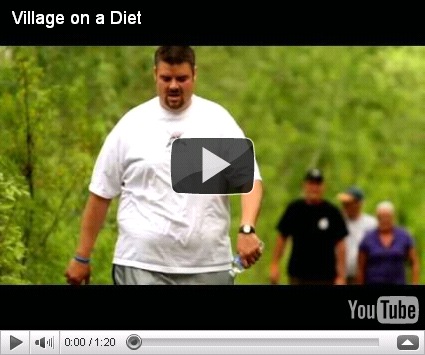
Look! You probably didn’t watch the first episode of CBC’s “Canadian version of the fat shows that now infest cable TV.” That’s a good thing. Don’t start! Issues of voyeurism aside I think Margret Wente (whose ope-ed stuff usually makes me cringe)gets it mostly right here.
“It’s a phony solution that reduces an extremely complex social challenge to a question of attitude. It’s junk-food TV, and if I were you, I wouldn’t touch it.”
Village on Diet is part of CBC’s Live Right Now program. Their attempt to make a difference in the health of Canadians.
Not only is this program predictably able to reduce the complexity of weight loss to the manageable stratagems regulated by the rigours of a television broadcast, it once again reinforces overt moralizing of public health through public media. When a broadcast company replete with irrelevance in its connection with Canadian audience, reaches for this type of candy floss programming to fill its schedule you gotta wonder just how much of Steven Harper’s own personal budget is financing this show…
 Before you favour me with the ‘kindnesses’ of your response, there is this:
 |
| I can't believe its not purple! |
"One can trace in advertising a narrative pattern which clearly shows the working of this new vaccine. It is found in the publicityfor Astra margarine. the episode always begins with a cry of indignation against margarine: 'A mousse? Made with margarine? Unthinkable!' 'Margarine? Your uncle will be furious!' And then one's eyes are opened, one's conscience becomes more pliable, and margarine is a delicious food tasty, digestible, economical, useful in all circumstances. The moral at the end is well known: 'Here you are rid of a prejudice which cost you dearly!'"Here's a video clip that might lend a helping hand in familiarizing yourself with the sort of advertising rhetoric that Barthes was talking about...
"It is in the same way that the Established Order relieves you of your progressive prejudices. The Army, an absolute value? It is unthinkable: (and here I should think any self-respecting Mennonite should be nodding along) look at its vexations, its strictness, the always possible blindness of its chiefs. The Church, infallible? Alas, it is very doubtful: look at its bigots, its powerless priests, its murderous conformism. And then common sense makes its reckoning: what is this trifling dross of Order, compared to its advantages? It is well worth the price of immunization. what does it matter, after all, if Order is a little brutal or a little blind, when it allows us to live cheaply? Here we are, in our turn, rid of a prejudice which cost us dearly, too dearly, which cost us much in scruples, in revolt, in fights and in solitude."Now don't get too worked up about Barthes slam on the church. He was addressing problems in the church that at the time of this writing in the late forties and fifties needed slamming. Let's remember that this was precisely the time when under the auspices of church work residential schools, and significantly oppressive views toward women were rampant in the dominant church denominations in Europe (Barthes was French). What is important here is to think about the way that we perhaps have allowed ourselves to be inoculated against protesting the forms of corrupt and oppressive behavior that tends to sneak under our noses because we so willingly gobble us the advertising buzz around us. Delicio Pizza commercials are rampant - lettuce commercials not so much. Why is it that 'healthy' food like vegetables and fruit cost more than 'unhealthy' stuff like the bake-it-yourself-and-we-promise-it-will-taste-just-as-good-as-the-grease-drenched-stuff-you-order-from-Panago-pizza?

“It kinda serves as an electronic conscience as well” (17:35m)
Whole radio interview available here: http://www.cbc.ca/video/news/audioplayer.html?clipid=1678089964 (start listening at around 11:30)
Can a conscience be electronically induced? If it is possible to see the use of these electronic surveillance devices as a way of reinforcing important strategies of socialization (like going to school (regardless of the quality of schooling received)), what does that mean for the kind of mindful labour that Matthew Crawford and Wendell Berry advocate as important for virtuous engagement with the world? Can being mindful be transferred onto a device?
Here is Crawford…
“…modern science adopts an otherworldy ideal of how we come to know nature: through mental constructions that are more intellectually tractable than material reality, and in particular amenable to mathematical representation. Through such renderings we become masters of nature. Yet the kind of thinking that begins from idealizations such as the frictionless surface and the perfect vacuum sometimes fail us, because it isn’t sufficiently involved with the particulars.”
Instead…
“…to be a good mechanic (or any other kind of person Crawford claims) you have to be constantly attentive to the possibility that you may be wrong.”
We need to, ”…perceive (the world) clearly, and this requires a kind of “un-selfing”. [A]nything which alters consciousness in the direction of unselfishness, objectivity, and realism is to be connected with virtue. [V]irtue is the attempt to pierce the veil of selfish consciousness and join the world as it really is.”
Crawford suggests that if we remain in the world of projections (via ‘modern science’)…
“We have to wonder, then, whether degraded work entails not just dumbing down but also a certain unintended moral education…There seems to be a vicious circle in which degraded work plays a pedagogical role, forming workers into material that is ill suited for anything but the over-determined world of careless labour.”
So then the irony of the ankle bracelet technology is that it is being used to help students get a better education when in fact my removing conscientious engagement with the world it may in fact being accomplishing quite the opposite effect?
Weight log: 211lb (forgot to take my pill again today – it is really hard to tell the difference between taking it and not taking it – Great work out today though!)
I’m a little frustrated with an article in Christianity Today entitled A Feast Fit for a King by Leslie Leyland Fields. Fields does an ample job of providing a provocative critique of industrialized food. Its a thoughtful piece that doesn’t skimp on guilt-tinged advice for meaningful redirection of food choices for people who are mindful of their desire to follow Christ. She outlines some of the important strategies that are beginning to be recognized as the best ways to address the problems resulting from turning food into an industry. Of these the admonition to engage with local food production in our purchasing habits is likely the strongest.
Leslie also provides a challenging look at the fact that the new (especially anti-agribusiness) food movements in fact are thinly disguised forms of ideological rhetoric which tend to wander far too much into realm of religion. This is a valid point and a helpful caution for those who might see reform in the praxis of food to be essential to solving almost all of the worlds problems. She points to the influence of Hindu and Buddhist philosophy in the core elements of these sort of movements. But she also marks the fact that these same philosophies are not that far from core values intoned by Christian dogma.
The problem that I have is that I think she gives up a little too easily. Her conclusion toward the end of the piece seems to recover the standard defeatist position that has been the Christian mantra since Augustine.
“Our attempts to restore the earth and return to Edenic communion with it ultimately cannot succeed. Just as we cannot perfect our bodies or spirits through eating pure foods, so we cannot perfect the earth, no matter how heroic our efforts. Because of our foreparents' appetite for authority and forbidden food, creation has been groaning, subjected to futility and death… We steward the earth and exercise dominion over its creatures as expressions of love for and obedience to our Creator, who named it all very good, but we cannot take back or re-create the garden. Not until heaven will we see the garden restored.”
Stewardship and dominion over the earth and its creatures makes absolutely no sense if that stewardship and dominion do not have some actual consequences. We may as well bury the earth and its creatures in a hole and wait for the master to return. The earth and its creatures matter to God. They are not just symbolic elements of a uber complex Lego world he has fashioned for us to prove we love him in. These are not play things we are dealing with – they are the work of the master designer? Right? Eden may very well not be recoverable but then Eden likely not even a desirable idea for us to pursue. A more realistic idea would be to work within the indictment of man’s relegation to the make food by the sweat of his brow. To see this ‘curse’ to be the most potentially redemptive feature of our engagement with the real world might be the start of finding ways to recover honesty and integrity into how we consume and produce food. And is it not time for intelligent Christians to refuse to engage with the narcissism that results in the standard “-not until heaven” line. How arrogant is that. I mean can you even imagine anyone with a thread of human decency saying those words to those facing starvation and mal-nutrition around the world. At best it sounds something like this, “We’re sorry we aren’t going to help you because after all we can’t fix everything and heaven is just around the corner when we can forget that these terrible things ever happened in the first place – now say your prayers!”
It’s time to admit that more can be done and more responsibly. We have not even reached heroic status.
“But these truths were a fire in me then. Now I can tell them without being burned. These truths do not have to be hurled in men’s faces. They are not intended to ignite fervor. I do not trust fervor.
Every time it has burst out somewhere, it has brought fire, famine, misery….And contempt for man.
Fervor is the weapon of choice of the impotent.” – Frantz Fanon (Black Skin, White Masks)

“There seems to be a vicious circle in which degraded work plays a pedagogical role, forming workers into material that is ill suited for anything but the overdetermined world of careless labour.”Ouch!

I am not a mechanism, an assembly of various sections.
And it is not because the mechanism is working wrongly, that I am ill.
I am ill because of wounds to the soul, to the deep emotional self
and the wounds to the soul take a long, long time, only time can help
and patience, and a certain difficult repentance
long, difficult repentance, realization of life’s mistake, and the freeing oneself
from the endless repetition of the mistake
which mankind at large has chosen to sanctify. – D.H. Lawrence
Obesity is commonly understood as an illness. Here I want to superimpose an interpretation of Lawrence’s poem that may not be accommodating of his intention but I think there is room in his obscure language to make this available.
If as in a Cartesian sense the body is a machine, it makes sense to think that there must be possible to arrive at the idea of optimally running machine. Obesity from the point of view of optimum mechanical efficiency should be considered as an illness. But Lawrence is actually trying to reframe the idea of illness. Here illness is connected not to an improper function of the body/machine. Illness is connected to ‘wounds to the soul’ which he suggests take a ‘long, long time’ to recover from. So then obesity is not an illness of the body but of the soul. This is even worse. This turns into: “I am obese – I have an ill soul.” This is a short step away from: “You are obese – you are a bad person!” But something else is available here in Lawrence.
He suggests that these soul wounds require a ‘certain difficult repentance…of life’s mistake’. So perhaps if you are obese Lawrence would say that all one needs to do is repent of your mistakes – not of the body but of the mind and soul. So far we have covered the dominant rhetoric of the plenty of the weight loss as self-help programs (i.e. Weight Watchers, Weigh Down Diet, even Curves). Think right – eat right – be thin -they tell you. But it is also the ‘freeing oneself from the endless repetition of the mistake which mankind at large has chosen to sanctify.’ So what is this socially sanctified mistake that Lawrence is talking about? It is quite possible that Lawrence had a specific social problem in mind that was systematically opposed to healing. But he seems to have avoided being too direct in his accusation. As a result the poem is open for this: the endlessly repeated mistake that individuals must free themselves from is nothing less than seeing the body as a mechanism.
So what?
Perhaps if the body isn’t a mechanism then we can stop moralizing the body. Maybe we can stop using the body as a marker to determine which individuals are evil and which one’s are good. Maybe a better idea of illness can be recaptured. Maybe the common judgement of lazy, gluttonous, dirty, or careless can stop being the moral tags affixed to bodies that stand outside of the arbitrary way we have thought the typical body should look.
disclaimer: I am not in anyway trying to be an apologist for Lawrence. I doubt there is much of his ideological perspective I could endorse.
Weight log: 210lbs (now the trick is to keep it off till next Friday-yikes)
Hey everybody,
If you are interested in uploading your pics of 100lbs of significant stuff here is the PhotoBucket account that you can use to do that. http://s1209.photobucket.com/albums/cc398/HundredPounds/ The account name is “hundredpounds” and the password is, “100pounds”. Feel free to upload your pics at anytime. Looking forward to seeing what you all come up with.
 |
| sporting my newly crafted Saskatchewan RoughRiders hat |
I want to be very careful here. It seems that racism is a distinct (and more horrific) form of bigotry. The oppression of non-whites is hardly something to trivialize with a comparison to other forms of discrimination. I do think it is possible to extract from the field of racism a particular nuance of the human experience of positional violence. I know violence seems like an overly loaded term in this space. It is appropriate if only to suggest that the act of reducing the other to something less is in itself a violent act where power is exercised to control the other. With all due respect and deference since I am a after all a white man I want to suggest a comparison that might get at a peculiarity at work in the field an us / them formulation.
In racism there is the black person and the white person. In body-sizism there is the fat person and the thin person. Black is to fat as White is to thin. This comparative equivalency is only really positional and not actual lest we fall into the dismissive problem stated above.
In order to think about this comparison let us turn to Frantz Fanon who gives us theory of how language situates and reduces the black person to a position of depersonalization. Fanon in the introduction to his first (and my favourite work) book Black Skin White Masks posits the way language works to reduce the black.
“To speak means to be in a position to use a certain syntax, to grasp the morphology of this or that language, but it means above all to assume a culture, to support the weight of a civilization…The Negro of the Antilles will be proportionately whiter-that is, he will come closer to being a real human being-in direct ratio to his mastery of the French language.”
Fanon is suggesting that the adoption of a language situates the individual to a restriction of identity as a subject. I think this should be fairly clear for anyone who has tried to master a second language since what becomes immediately apparent is the way the new language forces a different perspective, thought process, etc. The better one can speak the language the better able the individual is able to negotiate the essential elements of living within that culture. The accent is what gives one away as a foreign speaker – it keeps one at a distance. Distance might be negotiable but what Fanon suggests is that ultimately this restriction – the act of supporting ‘the weight of a civilization’ is an act of complicity toward a denial of the black person’s real identity as they strive to take on the whole cultural aesthetic of white person.
Turning back to food, I have already talked about how theorists have framed food as a system of signs that operate like a language. Food and eating is a way to communicate. Eating in a certain way is a way of producing identity.
Fanon again describes the project of coming out from under the restriction that language can impose on the racial oppressed black.
“We shall have no mercy for the former governors, the former missionaries. To us, the man who adores the Negro is as “sick” as the man who abominates him. Conversely, the black man who wants to turn his race white is as miserable as he who preaches hatred for the whites. In the absolute, the black is no more to be loved than the Czech, and truly what is to be done is to set man free…Mankind set free of the trampoline that is the resistance of others, and digging into its own flesh to find meaning.”
What Fanon is interested in is not just having the black person find vindication or revenge on the oppressor but instead to escape the entire system that allows this kind of oppression to exist and flourish. The point for the black person is not to achieve the position of the white it is to smash the whole thing to pieces to get at freedom. Fanon is alerting us to the fact that there is something deeply problematic about the function of distinguishing ourselves against another as something superior.
From here it is interesting to think about food again. If eating is a language than the supermarket is like a sort of dictionary. It catalogues the ‘words’ that are available for us to use to talk with the ‘language’ of food. And just like a dictionary a supermarket seems to provide a comprehensive catalogue of all the available words that we can use. (How many times have we heard in grade school: If its not in the dictionary then its not a word – of course in that there is no accounting for Sarah Palin’s “refudiate”) So when we head down the peanut butter aisle we think we are choosing from all the available kinds of peanut butter available – they are all there side by side. Chunky, Crunchy, extra Chunky, smooth, extra smooth, natural, organic, light, reduced fat, etc. – they are all right there together. But what we quickly and intuitively come to know is that although this seems like real choice – it is only actually a limited choice. There must be other peanut butters out there – they just did not make it on to the shelf. This illusion of real choice operates in the same way that words operate in a given language. There seem to be a limited amount of words available to use within a language to express what we want to say. So too it is with food and eating.
If the black man is reduced in speaking another language is the fat man reduced in speaking a different language. If I as a former fat man begin to speak in the new language of ‘being/becoming thin’ what do I do to the fat man. I say that the fat man was not as viable as the new thin man. I want to be thin so I choose to speak in a new language of food. I eat less. I eat the ‘right’ foods to keep me thin and make me thinner. All the while my former fatness betrays my accent in the new language. I have no way to express the way food made my former identity with the new language I am speaking. It seems ironic and even heretical for me to suggest to my son to make some microwave popcorn for him and his friend when I know that this is not the language I am supposed to be ‘speaking’ (and as a father I should not be teaching my kids to speak in my mother tongue). But as a fat man I was able to say things with food that I can’t say now. I used to be able to have ‘words’ telling cooks how awesome their food was by helping myself to seconds and thirds. There seemed to be a way that the mere fact of me being large was able to function as a verification of goodness of food. Now as a thinning man I am left without a voice – reduced. At every turn I must also deny the existence of the old fat man even though the flaps of skin are still hanging well below my belt. I am scrutinized and worried over. How many times have I already heard, “I hope you won’t waste away to nothing.” How ridiculous is that – there is a long impossible road before my material nothingness is realized. But another nothingness has appeared. The invisibility of the fat man. The fat man does not speak – only the thin man speaks. I learn the right way to talk about the fat man. I feel much better now than I did then. I choose different words/food to create my identity. I am trying to become thin…you might think this the ultimate sacrilege to racist discourse but here goes…
to take liberties with Fanon…To us, the man who adores (pities) the Fatso is as “sick” as the man who abominates him. Conversely, the fat man who wants to turn his fatness thin is as miserable as he who preaches hatred for the skinny. In the absolute, the obese are no more to be loved than the anorexic, and truly what is to be done is to set man free.
Here is the root of it all. There is something essential in human nature that perverts the natural distinguishing that inevitably occurs between individuals. When a distinction become a sight of making one person more worthy than another – we have engaged in an act of oppression…
weight log: 219lb (so technically Mexico left a little extra around the waste line)
Hitting the books hard now – this is tough sledding.
This last week was good and hard at the same time – I will no doubt blog more of this in the next few days as I squirrel my way out of this pile of work. Save to say that when certain sociological theorists write about hauntings – I think I may indeed be catching a sliver of what that feels like…
I could not have had a more exquisite time with my wife of 20 years. This really was all that we had hoped for to celebrate our love together and it made us even more excited about the trip to Nicaragua that we are planning for next year. We can’t wait to be able to take our boys with us to explore this beautiful part of the world.
I can’t sign off tonight without a brief comment about the accident which claimed the lives of 7 people on the morning of the day that we left the Mayan Riviera. 5 of these were Canadians. A quick glance through any Canadian press agency will tell you of the tragedy that this became for the Canadians involved. We know that they were a part of a wedding, that a little boy was one of the victims and so on. Now I mean no disrespect to the families of this individuals’ families and friends. Their loss is no doubt immense.
What I can’t get out of my mind is that we know very little about who the Mexican men were. The Canadian press told nothing other than their nationality but even after scouring the Mexican papers there is precious little that we know about these two. Their names and the age of one of the men was confirmed but nothing else. What bothers me is that the details of the lives of the Canadians seemed important and framed the situation as tragic and worthy of deep sympathy. Clearly, the loss of the Mexican lives is no less tragic but because we have no details there is no way to know who was left behind. In a place where scrapping by is the way life is – someone is now wondering were their next meal is coming from or worse. By not talking about the details of their lives we have left them in a certain kind of invisible state. (not that unlike the state of being that Ralph Ellison describes in Invisible Man) I am trying not to be bitter against our Canadian-centric digestion of this story but it is really hard for me. The tragedy is a glaring confusion of positions. A group of Canadians upwardly mobile enough to afford to get married in a far away place – with all expenses paid, etc, etc, – have their lives cut short in an accident in that place. Their choices put them in a place that was to cause their demise and great sorrow for their families. The Mexican men were in a much different place. They too made the choice to be there but their choices most likely revolved around a complex set of negotiations between kin and friends to stave off the edges of poverty in this place. 
forgetting is such an important part of how we validate our own importance…
On a much lighter note – here is one thing I will not forget soon. The look of my boys in their newly acquired wrestling masks. Boys I can’t wait to let you taste this place that haunts me still.
Oh and I would be completely remiss to publically thank Char’s mom for watching our boys for the week. They were spoiled to bits.
Weight Log: 218
Exhibit A: Sunrise Berry Farms Saskatoon Pie

Exhibit B: Farmer’s Market Blueberry Pie
Both of these products speak but in substantially different ways. The first one clearly has less information displayed than the second one does. The first one appears to be more silent than the second one. Exhibit B: Lists the flavour, the weight, the price, the fact that the berries used are wild, a notification of an ‘egg wash’ process, that the pie was baked in the store, that the pie is intended to emulate a ‘country-style’ aesthetic, – and it does so in both official languages. Exhibit A lists, the flavour, the business logo – and that’s it. Both pies do not tell you where the berries were picked. It does not tell you who made the pie (in fact exhibit A actually identifies the company while the apparent logo in the Exhibit B is actually a pseudo in house brand of the store which misdirects the consumer as to the identity of the producer).
The first pie as many of you know is one that I sell every weekend – its a small 4” Saskatoon Pie – perfect for coffee break. It is one of the most popular pies that we sell every week at the Lethbridge Farmers Market. The second pie is one that I saw while shopping at one of the local big grocery chains this afternoon. It is ironic that the second pie is called a Farmers Market Pie because it is clearly not sold either in the physical context of the Farmers Market or by a person who could legitimately qualify as a vendor at a Farmer’s Market (in fact it is not really sold by a person at all). The taste of either pie is sort of irrelevant yet I have a pretty good idea which one would win in a taste test (although I have not tasted Exhibit B:)
In the last few classes of our course part of what our discussions have led to is questions like: how do we determine what is authentic? and how does the constant onslaught of new consumer goods cause a type of cultural amnesia? All these questions have led me to another question which is closely tied to the first two: in what ways do the politics of our economic system silence certain voices while privileging others?
It has always seemed strange to me that older ladies will come to buy our pies at the market. These are women who likely have acquired the skill of making pie/pastry as a part of a fairly patriarchal social framework. These ‘grandmas’ know how to make pie. So what are they doing when they come to the market to buy our pie? One of the things they are doing is giving up the ability to claim the pie as their own product (this must be a fairly calculated move reasons their own energy level and their desire to produce something that their children/friends enjoy.) They are still retaining the ability to govern the discursive field of what type of pie is seen as worthy of eating. This is the pie that Grandma serves and as a result it must be good because she serves it. Grandma and the production of pie are synonymous with quality. Would Grandma ever bring an Exhibit B: pie home – not likely? The connection to Grandma and pie is deeper than that. Grandma after all is the repository for the idea of ‘homemade’. Homemade isn’t just about where the product is made it is about how the product is made. What is the recipe? This means that a pie can hold some very strong sentiments about what things are supposed to be like. They might also be a repository for how things used to be…
When pies get made in batches instead of 1, 2, or 3 at a time something important happens. They stop being ‘homemade’. As soon as you sell more than 1, 2, or 3 pies at a time (let’s say at a bake sale) the authenticity of the recipe can be called into question. There is a uniqueness to a homemade pie – its a one-off – like a Picasso or Monet. No two pies of grandmas will taste exactly the same. Yet when we talk about something being homemade we don’t connote the idea of variability but rather of a consistently similar product that is reproduced in the same way every time – just like Grandma used to make it. But what the artisan pie baker can do is capitalize on this idea by producing a product that is consistent every time (or at least very close to the same product). A strict adherence to recipe and method produces the same product. What is interesting is what I have come to notice at the market over the years and was said numerous times to me today as costumers scrambled to pick up their products at the last market of the Fall. - “This pie tastes just like homemade.” or its corollary “This pie tastes like nothing like those cardboardy grocery store pies – this is the real thing!” Of course that gives a guy like me the fuzzies but what is going there. Me, the pie seller is commodifying an idea which becomes the product that I can sell effectively in this context. I am selling the real thing. But in reality I am selling a product that is as un-unique as a lithograph of the Mona Lisa in your favourite poster shop.
From that perspective the pie that I sell is not that different than the one I found on the shelf of the big grocery story. That company is engaging in reproduction of something more authentic. Yet clearly their pie is not held in as high esteem as the one I get to deal. But that is not for a lack of trying. Look again at the way the packaging begs to be identified as authentic. This authenticity is not however back to the idea of homemade or to grandma but to the place that has come to take grandmas place in the social consciousness. Their pie may in fact be just as tasty as our pie is but it clearly cannot produce the same aesthetic representation in the minds of its consumers. So the grocery store pie blares out its message that it is authentic and holds all the qualities a consumer might look for in a pie. My pie just sits there and waits to be picked up.
But here is the advantage that my pie has over the one on the shelf of the food pimping giant. My pie can answer your questions. Well not directly – but through me. I have been asked all manner of questions about pies and I have at times invented things to navigate an easier sale. But that has only been because the questions have just been completely bizarre and outlandish. Did you bake this pie? When was it baked? Do you add a softening agent to make the skins of the berries softer? Is it alright if I buy this pie and say that I made it myself? (to which I answered - - yes) Why does the sugar make polka dots on the crust? Will you sell this pie for less money? Do I get a deal? Could you make a raspberry pie? The fact is that if the customer has any question at all about the product they can and often will ask me. And I will to the best of my ability deliver an accurate answer. YOU JUST CAN’T ASK THE GROCERY STORE PIE A DARN THING! You have to depend on what the box tells you.
But you can depend on one other thing as well. You can depend on the political position of the monstrous sustenance peddler. You see the giant super store has positioned itself well. It is the fount of variety, the guardian of safety in food storage, the regulator against prohibitive food pricing. As such it has come to represent reliability in a significant way. Reliability – when is the last time you went to the grocery store and found that they did not have milk? So from that position the store can make a pie and wrap it in a box that is screaming its identity like so many of the bothersome toddlers that get dragged up and down the aisle in those stores. And the consumer will pick up that pie – i tell you – the consumer will pick up that pie because it is even more reliable than the farmers market pie. The farmers market pie after all could be contaminated by the farm. If the farmers wife is doing this in her kitchen (which by the way would never pass the food inspection standards that each vendor must meet) are we going to get the farmers greasy fingers mixing the dough? This is all desperately ironic since after all we know that grandma’s pie often had mistakes built right into it. Pies were made right after slaughtering chickens and sometime grandpa got his fingers in the pie filling before it was baked. Other times grandma would run out of a certain ingredient and then you’d get a surprise chokecherry or two in your Saskatoon pie. But we sure loved grandma’s pie – and still do. But now we can dismiss all the inconsistency that made her pie awesome and we can buy the cardboard pie because it is reliable.
The consumer gives up the right to ask the pie questions and must depend on the box to do the talking. So now the pie that says the least actually holds the strongest voice. The pie that can answer any question you ask of it (through me) has a much weaker voice. And grandma still isn’t making her own pies anymore.

But the greater silence is that in the consumer mentality that is common to our social fabric we have traded the beauty of inconsistency for the reliability of consistent and convenient. As Paul Connerton suggests, “A handmade world, in which all things were made one by one was a slow world.” Mechanical reproduction transforms society into one that is in constant progress toward the new latest product and into a perpetual forgetting. This forgetting is not as straight-forward as I have just described but it is an important place for us investigate the influences on our consumption of food.
Jason Laurendeau wrote an article with Carly Adams on the topic of Women’s Ski Jumping in the Olympics. The authors address these silences ( or we might even be able to say at this point – the memory losses). Certain voices get to speak louder than others and as a result certain aspects of the topic get privileged and others get forgotten, “…a given discourse appears with regularity across a range of texts (broadly defined) and practices to regulate what may be said ‘within the true’ about a given subject in a particular socio-historical moment. Not only, then, does a discourse constrain what can meaningfully be said about a particular topic at a particular time, but it also works to authorize particular voices and silence others.” p. 433
From this vantage point we see our willingness to disengage with the messiness of the authentic in order to gratify and satisfy other political voices that perhaps keep us from engaging social reality that is more connected to each other. When you buy an Exhibit B: pie you don’t have to hear about the relative that passed away suddenly. You don’t have to engage with people. Perhaps food after all is the one place where we might be able to restore ourselves to each other……………
…from there let the pie speak!


“…left to itself, stuff tends to modesty. There is a natural humility to things, in that they work best as the frame that guides our sense of what is appropriate, rather than as things we pay regard to in their own right. This tendency can make stuff quite powerful when put into the service of ideology. when someone tells us we should do this or be that, we bridle and feel put upon. When this message is carried, not by a hectoring voice, but well hidden with the mere substance of apparently silent stuff, we are less likely to sense our disempowerment.” – Daniel Miller in Stuff
“In that tradition (of Marxist analysis), ideology stood for paradox; that as a process of objectification people may well understand themselves in the mirror of the world they live within. but what happens when that world is created by others, rather than by themselves? If they see themselves in that world, then it would follow that they now misunderstand themselves” - Daniel Miller in Stuff


